Permanent event links
QR, listener and capture links are ready as soon as the event is created.
LIVE EVENT LANGUAGE PLATFORM
VerbaStage brings stage, Q&A and multi-room audio to every attendee’s phone with real-time interpretation, natural speech and live captions.
Stage live · Turkish source
QR, listener and capture links are ready as soon as the event is created.
Both audio sources stay connected while the operator puts only the right source on air.
Each target language is produced once and broadcast to its audience room.
AS SIMPLE AS A QR
Attendees never hunt through halls or session lists. They scan the event-specific QR, choose a language and start listening.
Create a permanent event package with schedule, room, stage language and target languages.
A VerbaStage field operator or authorized customer computer sends stage and Q&A audio over scoped links.
Speech becomes captions, translation and natural audio, then enters a dedicated language room.
Transcripts, audio, feedback, usage and service-desk records stay event-scoped according to the agreement and recording choices.
EVENT OPERATIONS PLATFORM
VerbaStage brings pre-event planning, live interpretation, multilingual Q&A and attendee support into one operational platform.
Shareable listener QR, help, operator, stage capture and Q&A capture links.
A foreign-language question returns in the stage language; the answer is broadcast to all selected rooms.
Assigned operators run their events while administrators can intervene across live sessions.
Question queue, headphone request, inventory and a mobile pickup direction card.
Availability and capacity signals are tracked per event, with critical conditions routed to the operations team.
Source/translated text, audio, feedback and an audit trail according to the agreement and recording choices.
BUILT FOR THE REAL WORLD
One hotel room, seven seminars at a fair, or simultaneous events across cities: every stream keeps its own identity, team, languages and archive.
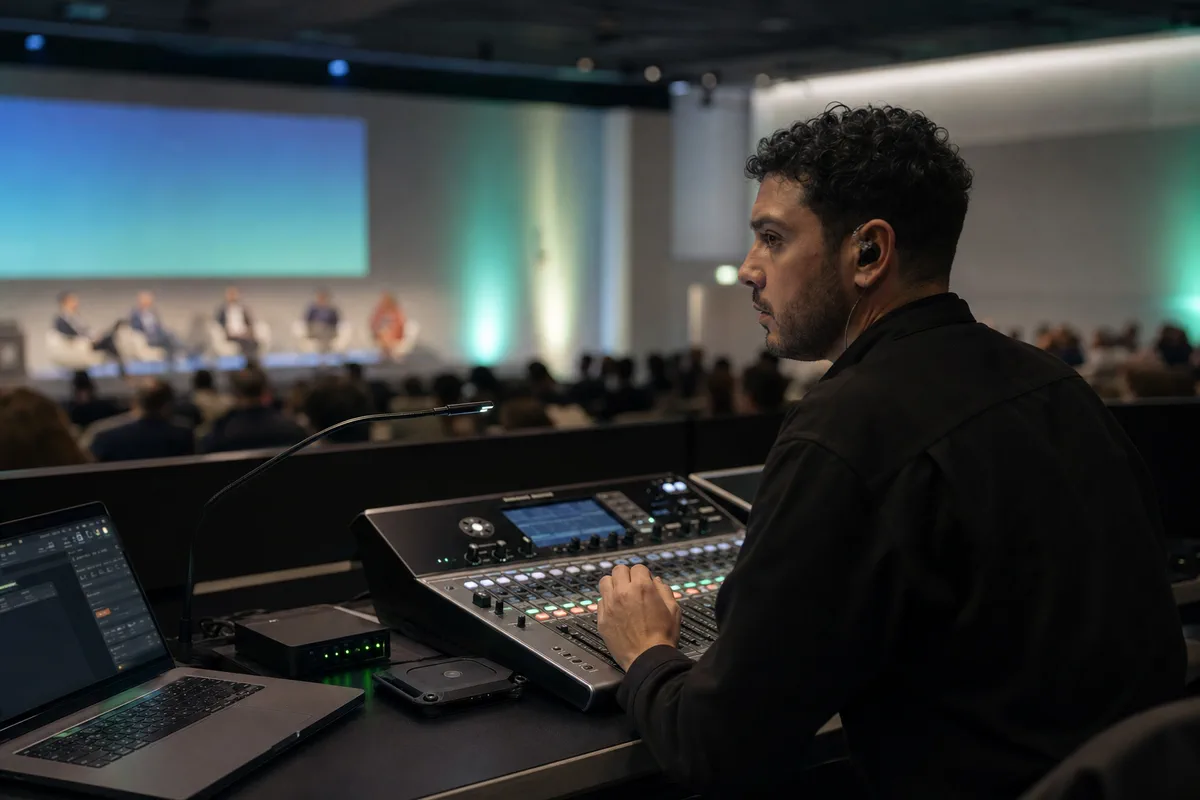 01Illustrative image
Clean mixer feed, backup connectivity, operator takeover and a real-device rehearsal before doors open.
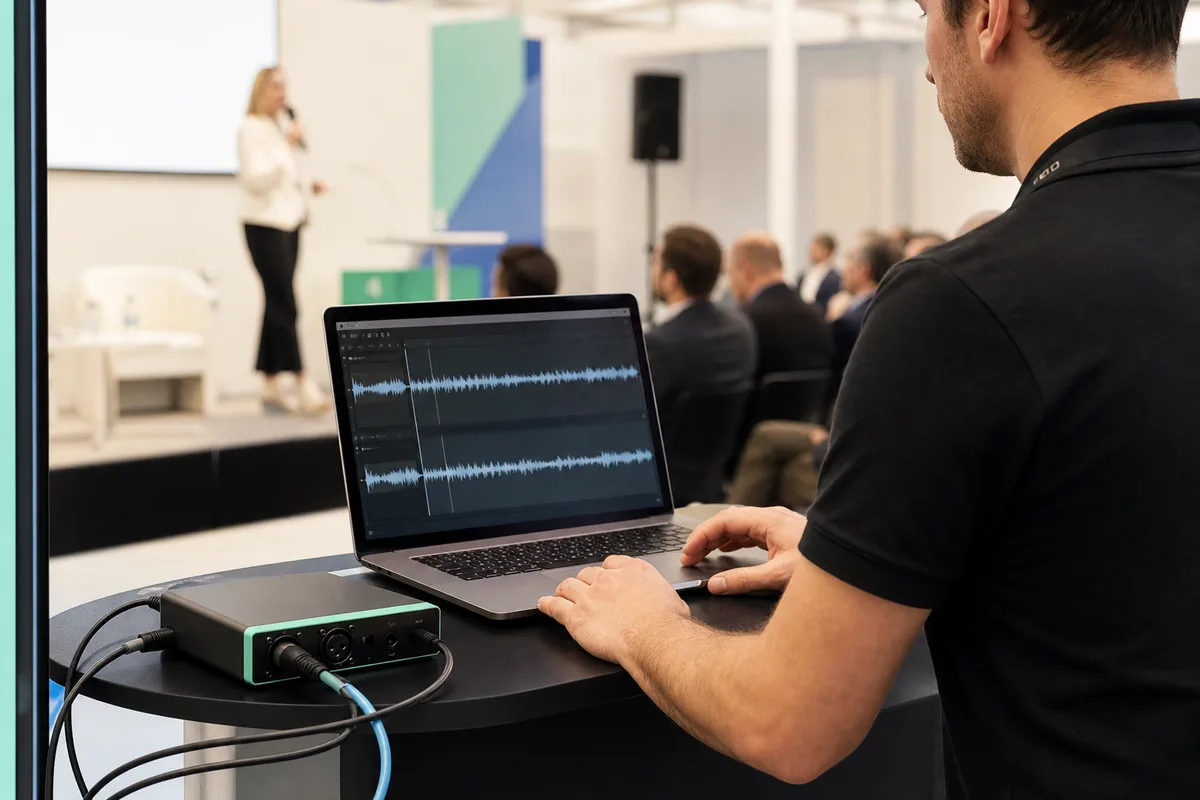 02Illustrative image
An authorized computer receives a link scoped to one event and one audio source; access closes with the event lifecycle.
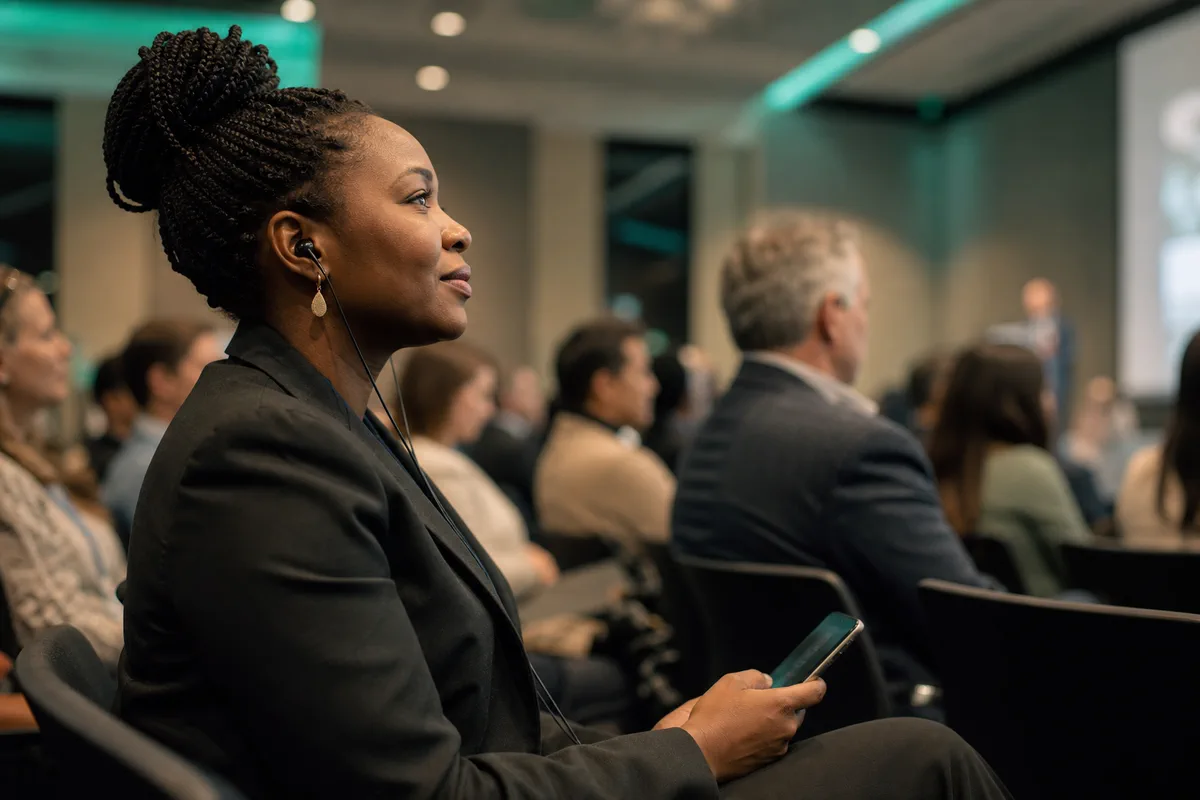 03Illustrative image
Language selection, audio + captions, screen-off listening on supported phones and headphone pickup guidance when needed.
TRUST AND CONTINUITY
Privileged pages are role-protected and event data is isolated. Customer broadcasts open only after service continuity, the venue network, devices, alerting and the field plan pass the pre-event gate.
WHY VERBASTAGE
AI simultaneous interpretation now exists in many products. The difference is whether the real flow of a live event — speaker, Q&A, several halls, a field team — is run as one operation. The three questions below explain how VerbaStage works and where it differs.
AI simultaneous interpretation is a live broadcast service that turns a speaker’s voice into text instantly, translates it in context and speaks it in the target language with a natural voice, while attendees listen on their own phones. VerbaStage applies a one-speaker, many-languages principle: each target language is produced once and reaches everyone in that language room at the same time, so the audience size scales the broadcast, not the interpretation cost. Attendees install nothing: they scan the event QR code, pick a language and listen. Audio and live captions are delivered together. The goal is a natural narration that fits the speaker’s emotion; a copy of the voice is not promised.
From the speaker’s mouth to the attendee’s ear, the typical delay including the network is 3–6 seconds. Part of it is processing; a significant part is waiting for a translatable unit of meaning to complete — the same reason human simultaneous interpreters speak 2–6 seconds behind. A promise of sub-second “instant” interpretation does not fit the nature of the task; VerbaStage states this figure in its marketing and in the product, and has it measured in the hall during the event rehearsal.
A congress stage is not one-way: questions come from the floor in other languages. VerbaStage always keeps the stage language open as a return room; a foreign-language question reaches the speaker interpreted into the stage language, and the answer is broadcast to every selected language. Seven seminars at one fair, or events in different cities on the same day: every broadcast keeps its own identity, team, languages and archive. The operator decides which source is on air, and rehearsals run on real devices before doors open.
FREQUENTLY ASKED
VERBASTAGE / LIVE
Share your agenda, room count and target languages. We will shape the field and platform plan together.